
Cart is empty

History of Shungite

Shungite, a unique mineral is estimated to have formed over 2 billion years ago. Its one of the oldest known carbon deposits and is thought to be formed from Algae. First named in 1887, the mineral was discovered near the Karelian village of 'Shunga', in the region of Lake Onega, in the Russian Federation. In Russia Shungite has been used for healing purposes as far back as the seventeenth century and was known for it's pure spring water. Peter the Great established the 'Marcial Waters' a health resort established that still exists today, partly as a museum. The purest deposits of Shungite are rare non- crystalline, allotropic forms of carbon, a new generation of natural mineral sorbents, with high super-conductivity.
Grades of Shungite
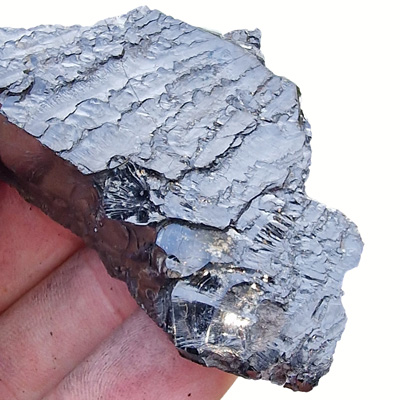 There are three distinct grades of Shungite, with the highest grade being 90-98% carbon (Elite Noble 'Silver' Shungite). Shungite has the ability to catalytically oxidize organic substances absorbed on its surface and is a very powerful natural anti-oxidant, which can remove free radicals, out of water, 30 times more effectively than activated carbon. This is important as the build up of free radical from water treatments may impact negatively on health.
One thing to notice here, is just how brittle the Nobel grade is. Its very easy to chip when shaping into items, such as pyramids or cubes can be very difficult and most items are made from the 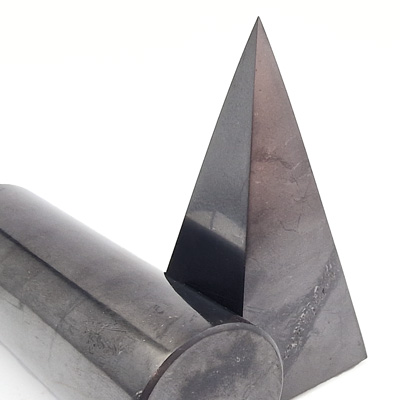 mid to high grades, which better suit the workman ship required. You can get jewellery items made from the High grade though.
The next grade can be 80-90% carbon, The Nubian pyramid here and the harmoniser bar are made from this grade. The feel, lightness and smoothness is very similar to the higher grade and if you look closely you can still the subtle inclusions of the grades within, appearing on the pyramid as a diagonal line.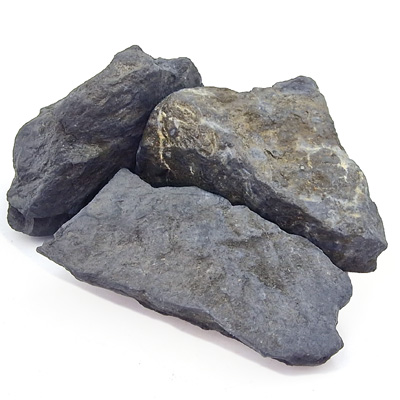 Lastly the bulk of shungite is known is black shungite, it appears almost black but once washed will appear as it does here. Again you can see the same types of inclusions in the stone samples here, which also appear on the pyramid above. The feel is consistently light to the hand, all grades seem almost too light to the touch.
Shungite and Fullerenes
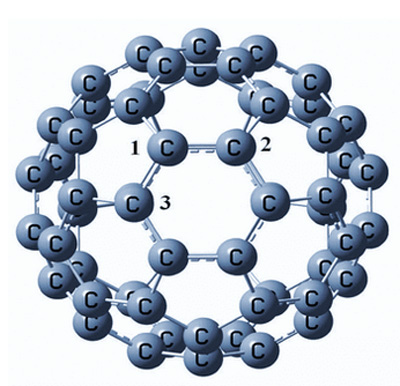 Fullerenes, Shungite can contain 'Fullerenes' - a special carbon molecule containing 60 or more carbon atoms, as a lattice structure. Russian medical scientists have studied and used Shungite for many years showing potential following complimentary effects: Anti-oxidant properties; Anti-inflammatory properties; Elimination and neutralisation of toxins; improves healing of wounds and burns; improves joint pains, skin and digestive disorders.
Other significant characteristics of shungite have also been shown to exist: high organic and inorganic chemical absorption capacity; antibacterial, antiviral, and anti-histamine activities; geopathic stress protection; and good protection against electromagnetic and radio waves. It has been demonstrated that shungite is biologically active and offers numerous advantages when utilized for residential or commercial ecological and agricultural reasons. Shungite can be used in industry to improve crop yield, retain more water, lessen soil acidity, and reduce the need for chemical and fertilizer treatments. Shungite is commonly utilized for microwave absorbers and is employed in many different industries. It has been demonstrated to be both safe and favourable to the environment. Carbon is one of the most common elements and the the basis for all organic life.
In 1996 the noble prize in chemistry was awarded to Smalley, Kroto, and Curl, for the 1985 discovery
of 'Fullerenes' by laser irradiation of solid graphite. The fullerene-like structure has also been found in graphite, carbon soot and Shungite.
University of Petrozavodsk, Republic of Karelia, Russia

has this monument of a model of the C60 fullerene structure. The first fullerene was discovered in 1985 by Sir Harold W. Kroto of the United Kingdom and by Richard E. Smalley and Robert F. Curl, Jr., of the United States.
Fullerene is any enclosed series of hollow carbon molecules, for instance C60 carbon molecule resembling a football shape, joined by single or double bonds to form a hollow sphere, using
pentagonal and hexagonal faces.
Shungite contains a unique ‘Fullerene' carbon structure that gives it great advantages for water purification, agriculture and protection purposes. Further and more extensive mineralogical and Geo-chemical investigations have been carried out by international scientists researching into new applications in various branches of science, industry, and technology, developing a basis for a variety of new nano-technological materials with nano-molecular structures.
The discovery of natural ‘Fullerenes’ has great implications for all the natural sciences.
Investigations of Shungite's mineralogical and geochemical properties have been carried out by Russian and other International scientists. Large amounts of this elemental carbon form has been found in the Lower Proterozoic rocks in the district of Shunga and are widespread in Zaonezhye and other areas of the Republic of Karelia. This interesting carbon form was formed from a tectonically active transition zone between the Baltic Sheild and the Russian Platform.
